$19.95 $17.96 Members

 $65.00 $58.50 Members

 $65.00 $58.50 Members

 $25.00 $22.50 Members

 $26.95 $24.26 Members

 $29.95 $26.96 Members

 $34.99 $31.50 Members
 $24.95 $22.46 Members

A constellation of the powerful Japanese American artists and designers who shaped American design in the postwar era.
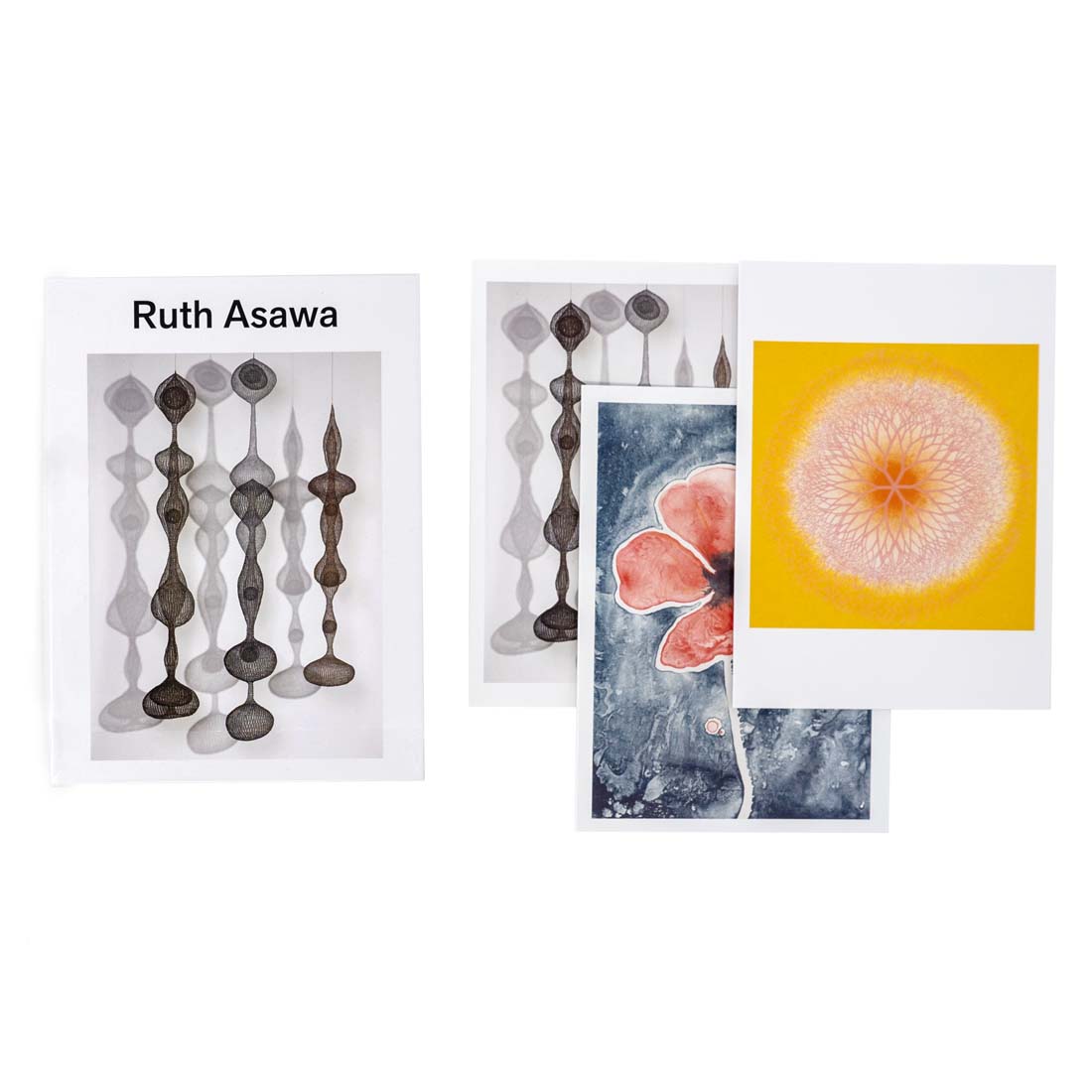
Beauty and craftsmanship are hallmarks of midcentury Japanese American art and design. From Isamu Noguchi’s iconic furniture to Ruth Asawa’s inventive wire sculptures, Japanese American artists transformed the aesthetic landscape of postwar America. Yet beneath this artistry lies a shared history marked by forced relocation and incarceration during World War II. Confronting this difficult past, Noguchi to Asawa: Designing Postwar America offers a recontextualization of the work of influential twentieth-century artists and designers through the lens of 1940s Japanese American incarceration.
The six artists highlighted in this publication span two generations: those who established their practice before incarceration—sculptor and designer Isamu Noguchi, architect and furniture designer George Nakashima, and sculptor Leo Amino—and those who received early artistic training in the camps—graphic designer S. Neil Fujita, fiber artist and weaver Kay Sekimachi, and sculptor Ruth Asawa. Interviews with the artists’ children and grandchildren and a conversation with the sole surviving artist, Sekimachi, offer intimate insights into the artists’ lives and practices. Collectively, the works, essays, and reflections address the broader histories of Asian labor in the United States, the racialization of Japanese Americans, and critical themes of visibility versus invisibility. Hardcover, 208 pages.

Museum members receive 10% off all items from our museum stores, including sale items and custom Art on Demand prints.